
In international boardrooms, diplomatic receptions, and cross-cultural business settings, few misunderstandings are as quietly costly as conflating etiquette with manners. Both matter. Both are learnable. Yet they are distinct in nature, purpose, and application — and for those who aspire to genuine executive presence on the global stage, that distinction is worth understanding clearly.
Etiquette: The Architecture of Appropriate Conduct
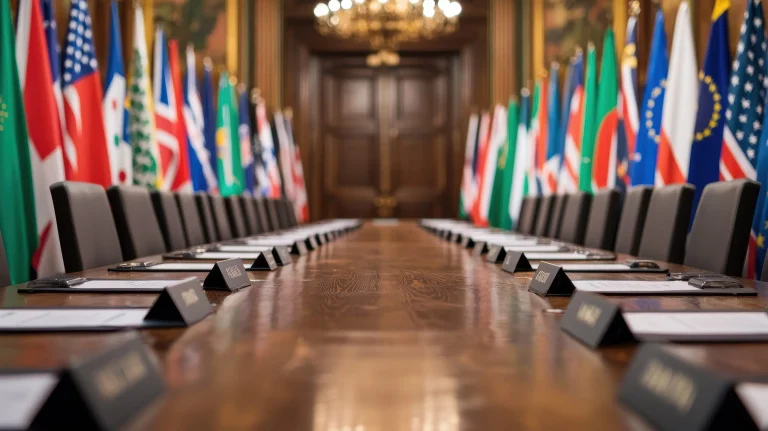
Etiquette is a codified system — a set of formal expectations governing behaviour in specific social, professional, or institutional contexts. It is shaped by tradition, hierarchy, and cultural convention, and it operates most visibly in high-stakes environments: diplomatic protocol, state functions, formal dinners, and international corporate settings.
Its defining characteristics are precision and context-specificity. In Germany, punctuality signals respect; arriving late reads as disrespect. In Japan, the exchange of business cards follows a prescribed ritual that reflects the gravity of the relationship. At a formal banquet, precedence determines who is seated first. These are not arbitrary rules — they are the codified grammar of a society’s values.
At ICPA, we teach international protocol not as a list of dos and don’ts, but as a living system through which executives, diplomats, and global professionals signal competence, cultural literacy, and respect.
Manners: The Character Behind Conduct
Manners operate at a different register. They are not codified so much as cultivated — the expression of a person’s values, emotional intelligence, and genuine regard for others. Where etiquette tells you which fork to use, manners determine whether you make your dinner companion feel at ease regardless of which fork they reach for.
The distinction is this: etiquette can be learned in an afternoon. Manners are developed over a lifetime — through discipline, self-awareness, and a sincere orientation towards others.
Good manners transcend culture. Attentiveness, warmth, the capacity to listen without interrupting, the instinct to make others feel seen — these qualities are recognised as virtues in Tokyo, London, Geneva, and Lagos alike.
Why the Distinction Matters Professionally
For executives and senior professionals navigating international environments, the interplay between etiquette and manners is a strategic consideration, not a social nicety.
Etiquette prevents missteps. It ensures you do not inadvertently offend a counterpart, misread a hierarchy, or breach the implicit codes of a formal occasion. This is the domain of international protocol and cross-cultural communication — the structured dimension of global competence.
Manners build trust. They are what people remember when the formal occasion is over — how you made them feel, whether you were genuinely present, whether your conduct reflected integrity as well as polish.
Mastery of both is what separates the merely well-trained from the genuinely distinguished.
A Framework Worth Studying
| Etiquette | Manners | |
|---|---|---|
| Nature | Codified rules and protocols | Personal values expressed in conduct |
| Context | Formal, situational | Universal, everyday |
| Origin | Cultural and institutional convention | Character and upbringing |
| Function | Prevents social and professional missteps | Builds authentic connection and trust |
| Flexibility | Context-specific | Adaptable across all settings |
Developing Both: The ICPA Approach
At the International Protocol Academy of Japan, our programmes are designed for those who understand that professional distinction is built on more than technical expertise. Our curriculum integrates international protocol, cross-cultural communication, and the refinement of personal conduct — equipping executives, diplomats, and global professionals with the full range of competencies that command quiet authority.
Whether you are preparing for an international role, representing your organisation at a senior level, or seeking to elevate your personal and professional presence, we invite you to explore our programmes.